
How to Design Your Easter Flower Arrangements
Create beautiful Easter Flower Arrangements with spring blooms, simple design tips, and step-by-step ideas to brighten your home this Easter season.
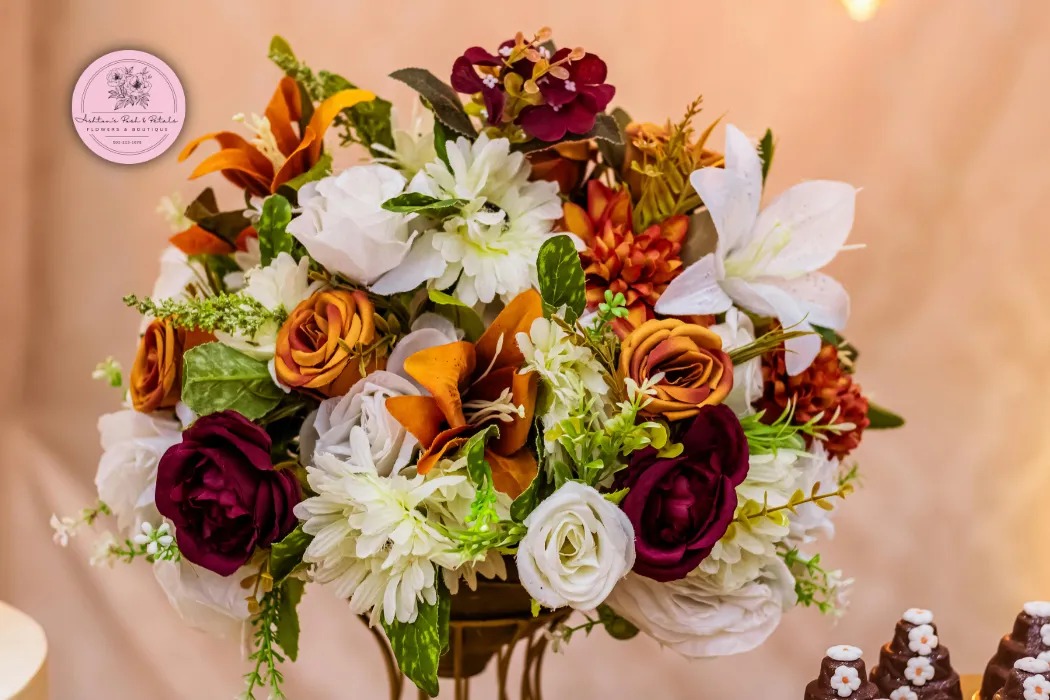
Making your own Easter flower arrangements is a wonderful way to bring pleasure, color, and comfort into your house. Making your own flower arrangements is a wonderful way to add color and freshness to any area, and flowers are a lovely way to enjoy the season. Choosing the flowers that best express the feelings of Easter and spring is the first step in creating your own flower arrangement.
Bright, cheery colors like yellow, pink, white, and purple are among the flowers that best express the true spirit of Easter and spring. When creating your own flower arrangement, it's also important to think about the vase or container that the flowers will be placed in. You must have a clear idea of the design you want the flowers to have before you start arranging them. In this manner, the style will quickly brighten your house and make it feel basic, colorful, and alive. Let’s explore it:
Things to Notice
There are a few things that you need to look for while making a floral arrangement for Easter. Let’s understand what is necessary:
1. Choose the Right Flowers for Easter
Choosing the right flowers is the most important step in making Easter arrangements. For this, one must choose flowers that are lively, seasonal, and durable. Tulips, daffodils, lilies, hyacinths, and carnations are among the most common flowers used in Easter bouquets. Every one of these flowers has a special beauty of its own.
Daffodils are bright and cheery, lilies are graceful and fragrant, hyacinths have a gentle, sweet scent, and tulips are elegant and fun. To prevent the taller flowers from overpowering the shorter ones, one must also pay attention to the height of the flowers. A balanced Easter bouquet that is colorful, fresh, and ideal for the occasion can be made by choosing the proper flowers.
2. Prepare Your Flowers Before Arranging
Make sure your flowers are ready before you start arranging. This means that you should use a knife or scissors to cut your flowers at an angle first of all. Any leaves that will be below the waterline should be removed because this will result in the growth of bacteria and shorten the life of your flowers.
Then add cool, fresh water into your vase and, if you can, add some food for your flowers. It's important to handle flowers gently when arranging them, especially tulips. To make the arrangement process easier, it is important to arrange your flowers according to their size and type. Your flowers will stay longer as a result, enhancing the beauty of your Easter arrangement.
3. Choose the Vase or Container
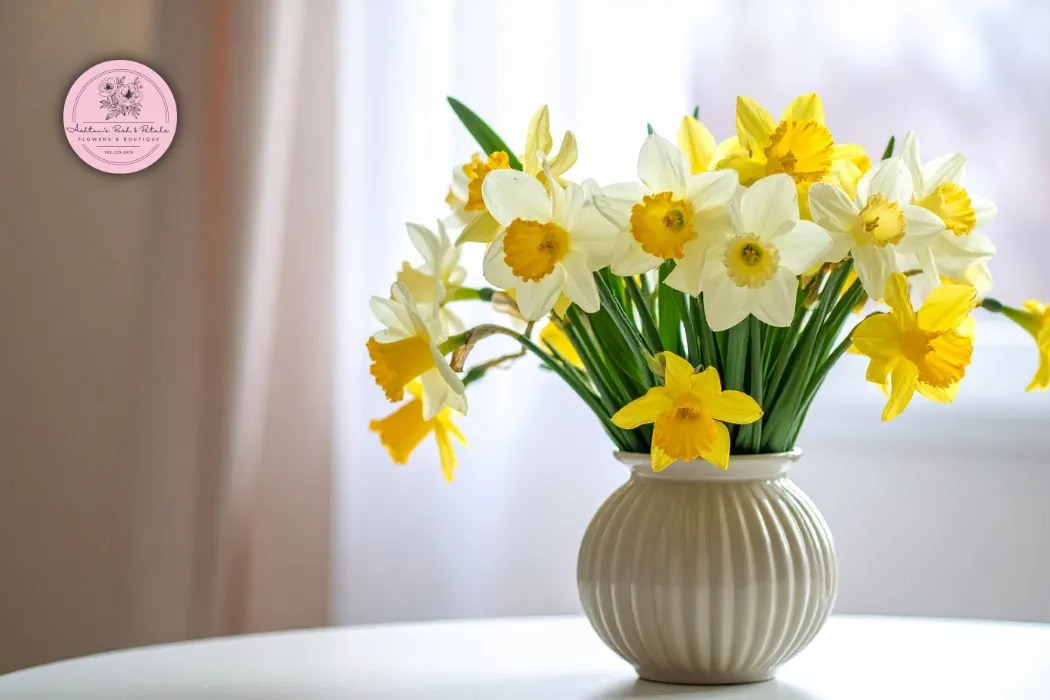
Choosing a suitable vase or container is important for your lovely Easter flower arrangement. The proper container enhances both your flowers and your interior design. While short, wide, shallow containers are ideal for short, full flowers like hyacinths or daffodils, long, narrow vases are ideal for long-stemmed flowers.
Glass or pastel vases, which represent the spirit of Easter, are another option for your Easter flowers. However, since germs might destroy your flowers, make sure your container is clean. Other containers, such as pots or baskets, can also be considered for an artistic appearance. Thus, the first step in creating lovely Easter flowers is selecting the right container.
Easter Flower Arrangements (Step-by-Step Guide)
To create a beautiful Easter flower arrangement, start by choosing bright spring colors like yellow, pink, white, and purple. Let’s have a look on steps:
- Choose a vase or container depending on the size of your flowers. Start with the placement of the tallest flowers, like tulips or lily flowers, at the back of the vase to ensure height.
- Then, place the medium-sized flowers, such as daffodils or roses, around the tall ones to make the arrangement balanced.
- Finally, fill the gaps with small flowers, such as freesia or hyacinths, to make the arrangement complete.
- Turn the vase while arranging the flowers to ensure that the arrangement looks good from all sides.
- The arrangement should be simple and natural, allowing each flower to be seen clearly, giving the impression of a bright and cheerful Easter arrangement.
List of Easter Flowers
When designing Easter flower arrangements, choosing the right blooms is key. Here is a list of popular flowers perfect for Easter:
1. Tulips
Tulips have become the most popular flowers for the Easter season because of their bright colors and understated beauty. The colors that are most appropriate for the springtime include pink, yellow, red, white, and purple. When working with tulips, be sure to remove the leaves that are below the waterline and cut the stems at an angle.
Tulips are lovely flowers that go well with other seasonal flowers like hyacinths and daffodils. They look beautiful in a vase by themselves as well. Their curving shape gives your arrangement more movement. Put the tall tulips in the middle and the shorter ones around them for a simple arrangement. They are lovely, colorful flowers that instantly make the room happier.
2. Daffodils
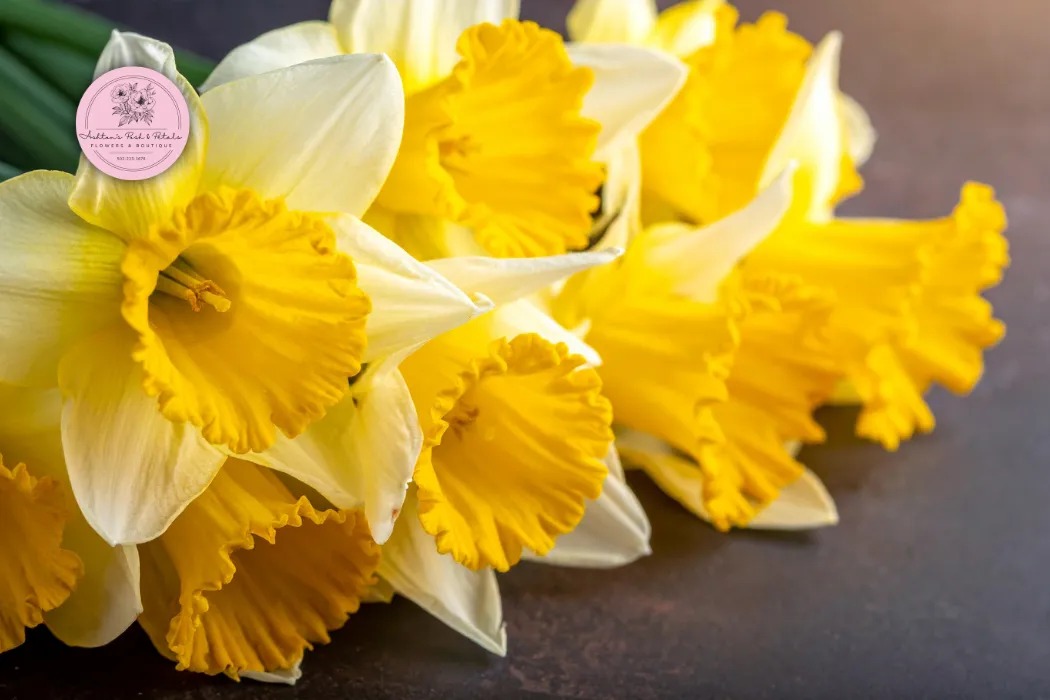
Daffodils are also connected to spring and Easter because of their beautiful yellow petals, which fill an environment with warmth and energy. Their bright trumpet-shaped flowers, which are cheery and attractive and look wonderful in arrangements on tables, fireplaces, or windowsills, are also linked to Easter. To keep your daffodils bright and fresh, cut the stems and place them in new water with flower food before putting them in a vase.
They match other flowers like tulips, lilies, or hyacinths, and you may go with different yellow colors for a more organic appearance. Daffodils' bright and cheery color will produce a warm and festive appearance, but you should treat your flowers gently because their petals are sensitive to breaking. Rotate your flowers so they look lovely from every angle.
3. Lilies
Lilies are lovely flowers that certainly give any Easter arrangement a hint of smoothness and beauty. The lily's trumpet-shaped flowers are fragrant and come in shades of orange, pink, and white. The leaves that will come into contact with the water should be removed while arranging your lily, because this will encourage the growth of bacteria. To give the arrangement height and excitement, the lilies' long stems should be positioned at the back.
For further contrast in their sizes and forms, the lily looks best when paired with tulips, daffodils, or roses. The arrangement will be both lovely to look at and nice to smell, thanks to the lily's fragrance, which will undoubtedly add to the overall atmosphere of your room. The beauty and attractiveness of the lily make it the ideal flower for any Easter arrangement.
4. Hyacinths
Hyacinths are small, colorful flowers that will give your Easter bouquet both beauty and fragrance. The clusters of tiny flowers, which are available in pink, purple, blue, and white colors, will add texture and interest to your arrangement. Before using the hyacinths in your arrangement, trim the stems slightly and remove the lowest leaves.
Hyacinths enhance other flowers, like tulips or lily stems, and are excellent filler flowers. The fragrance will enhance the freshness of your bouquet because it is light and sweet. For your Easter centerpiece, you can also plant the hyacinths in little pots or baskets. Hyacinths are a fantastic choice for adding brightness to any space all over the Easter season because of their vibrant colors and delightful fragrance.
5. Carnations
Carnations make an excellent choice for an Easter arrangement because they will last longer than many other flowers. Another lovely feature of the carnation is its ruffled texture, which allows it to blend in with the varied pink, red, white, and yellow colors of the other flowers in the arrangement. To keep the water clean when using carnations in an arrangement, it's important to trim the stems and remove any extra leaves.
Additionally, by filling up any gaps in the arrangement, the carnations will give it a complete appearance without overpowering the other flowers. To give the arrangement a full and well-balanced appearance, the carnations will also go well with the other flowers, including tulips, daffodils, and roses.
6. Roses
Traditional flowers like roses will add a romantic and beautiful touch to your Easter designs. Roses will add a lovely touch to your arrangements and come in a variety of colors, including pink, white, yellow, and peach. In order to prevent contaminating the water while placing the roses in your Easter arrangements, cut the stems at an angle and remove the leaves below the cut ends.
The ideal placement for roses is in the middle of your bouquets or evenly distributed throughout. Your arrangements will have a lovely contrast if you combine roses with other flowers like carnations, tulips, and lilies. To give your arrangements a more complete and organic appearance, you can also use roses with some greenery.
7. Iris
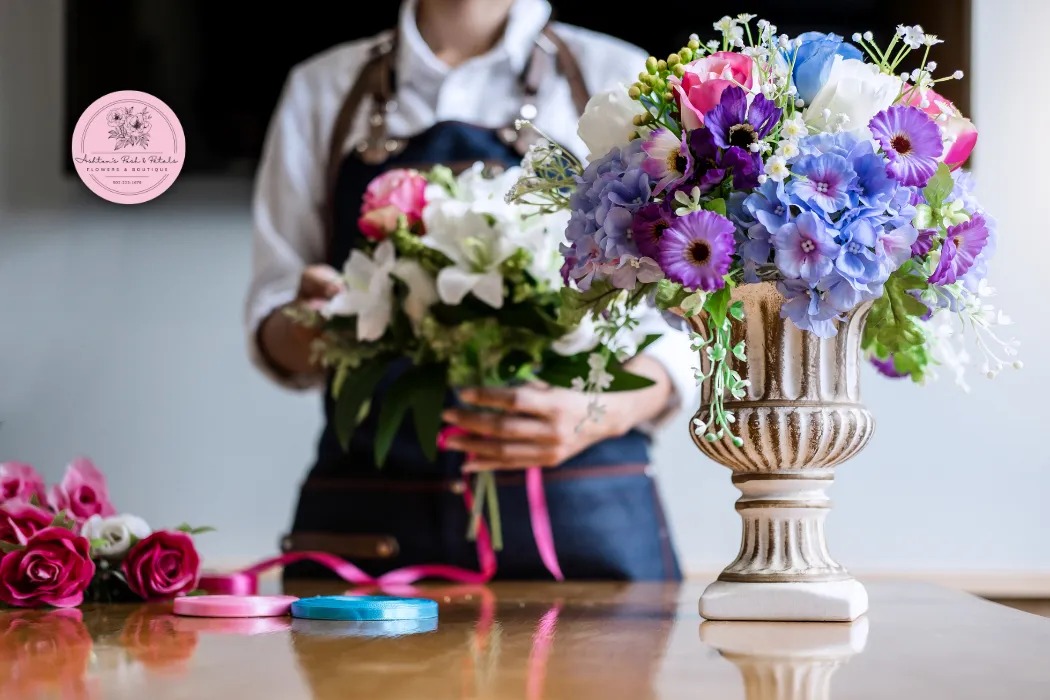
Irises are beautiful and eye-catching flowers that will stand out in any Easter display. The iris's tall stems and beautiful, unique purple, blue, yellow, and white petals add height and grace to any arrangement. Before finishing the arrangement, cut the stems at an angle and remove any leaves that may drop below the waterline. The iris is best positioned near the bottom of the arrangement to give it height and to direct the viewer's attention to it.
The arrangement will have the ideal contrast in height and texture because the carnations or daffodils are shorter than the iris. The iris is the ideal flower for any arrangement that celebrates the energy and vibrancy of the season and the Easter festival because of its bright colors and eye-catching appearance.
8. Peonies
Peonies are lovely flowers with big, spherical blooms that give any arrangement a sense of richness. Your Easter display will seem more luxurious with these flowers. Peonies' delicate petals come in pink, white, and red colors that give your arrangement depth. Leaves that will be buried in water should be removed before using the peony. Peony stems should be cut to fit your vase.
To make a balanced arrangement, place peonies in a cluster or encircle other flowers with them. These flowers complement carnations, tulips, and lilies beautifully. Peonies are fragrant flowers with a deep, velvety texture that gives your arrangement a natural appearance. These flowers are ideal for a wonderful Easter design since they give your arrangement a feeling of richness.
9. Freesia
Freesias are delicate flowers with a pleasant scent. In Easter bouquets, they look stunning. Small, trumpet-shaped flowers in colors of white, pink, yellow, and purple cover their long stems. It is necessary to cut the stems and remove any leaves that come into contact with water before adding the freesias to the bouquet.
As filler flowers, freesias look wonderful. They go well with carnations, daffodils, and tulips. Because of their lovely appearance and pleasant scent, they look wonderful in bouquets. Their delicate colors are appropriate for the Easter season. Their soft scent goes well with Easter's air of lightness.
10. Anemones
Anemones are amazing, beautiful flowers that will give your Easter arrangement a special touch. The anemones' vivid colors, which include red, purple, blue, and white, will surely create contrast and enhance the bouquet's visual attractiveness. Your bouquet will stand out thanks to the anemones' straightforward form and dark insides.
Cut the anemones' stems at an angle and remove any leaves that may fall below the waterline to prepare them for the bouquet. Given their bright and eye-catching appearances, the anemones' outstanding design will make the bouquet ideal for your Easter celebration, and they will certainly match the softer colors of the peony or the tulips.
How to Arrange Flowers?
The tallest flowers should be placed in the rear or in the middle of the vase when creating an Easter flower arrangement. This will give the flowers height and serve as the arrangement's main focal point. To achieve balance, the tall flowers should be surrounded by the medium-sized ones. To make the arrangement appear full and vibrant, the small flowers should then be placed into the empty spaces.
To make sure the arrangement appears good from every angle, rotate the vase while doing this. To guarantee that harmony is attained throughout the arrangement, it is important to pay attention to where the vibrant colors are placed. In addition, the flowers shouldn't be packed too closely because each one requires space to appear lovely. Your Easter flower arrangement will appear professional and lovely if you do this.
How to Care for Your Easter Flower Arrangements?
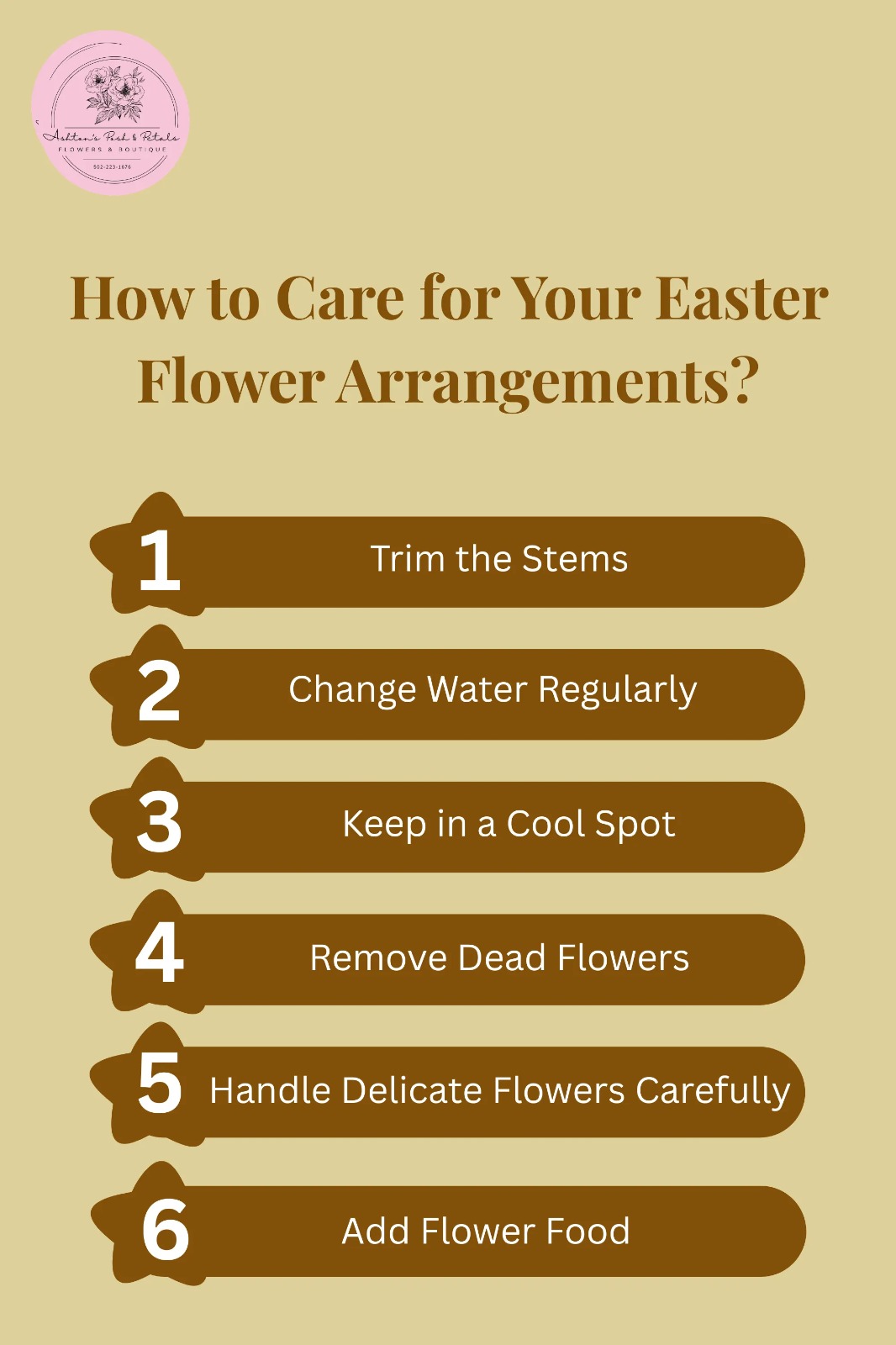
Maintaining the flowers once the arrangement is finished is just as important as the arrangement itself. To help the flowers absorb water, the stems should be slightly cut, and the water should be changed every two days. Additionally, the arrangement needs to be stored in a cool location away from heat vents, drafts, and light.
To maintain the arrangement's beauty and freshness, dead flowers should also be removed. Tulips and hyacinths are examples of delicate flowers that should be handled carefully and not packed too tightly in the vase. Your Easter flower arrangements will remain lovely throughout the holiday season if you add flower food or a small amount of sugar and lemon juice to the water.
Last Verdict
Making your own Easter flower arrangements is a great way to remember the occasion and add some color to your house. You may make lovely, vibrant, joyful, and stylish flower arrangements by selecting the appropriate flowers, such as tulips, daffodils, lilies, hyacinths, and carnations. Your flower arrangements will endure longer if you prepare the flowers correctly, choose the appropriate vase, and arrange them in the proper way.
You may make a great combination by combining long, medium, and short flowers. Freshness is also enhanced by the use of plants. Your Easter flower arrangements may light up your home for the whole Easter season if they are properly cared for. Flowers are not only lovely, but they also represent joy, which is the main subject of the Easter season.
FAQs
1. How long do Easter flower arrangements last?
Most fresh Easter flowers last between 5 and 10 days, depending on the type and care. Cutting stems, changing water, and adding flower food can help them stay fresh longer.
2. Can I mix different types of flowers in one arrangement?
Yes, mixing tulips, daffodils, lilies, and carnations creates a vibrant and interesting arrangement. Just balance the heights and colors for a natural look.
3. How should I care for my Easter flowers?
Trim stems every couple of days, remove leaves below the waterline, and keep the vase in a cool area away from direct sunlight or heat sources.
4. Which flowers are best for small vases?
Freesias, hyacinths, and small tulips work well in small vases or bowls because they are delicate, fragrant, and easy to arrange in compact spaces.
5. Can I use non-traditional colors for Easter arrangements?
Yes, while pastels are popular, bright and bold colors like red, orange, or deep purple can add a unique and lively touch to your Easter décor.