
Orchid Care Guide: How to Care for Orchids
Learn how to care for orchids with simple tips on watering, light, humidity, pruning, fertilizing, repotting, pests, and disease prevention.
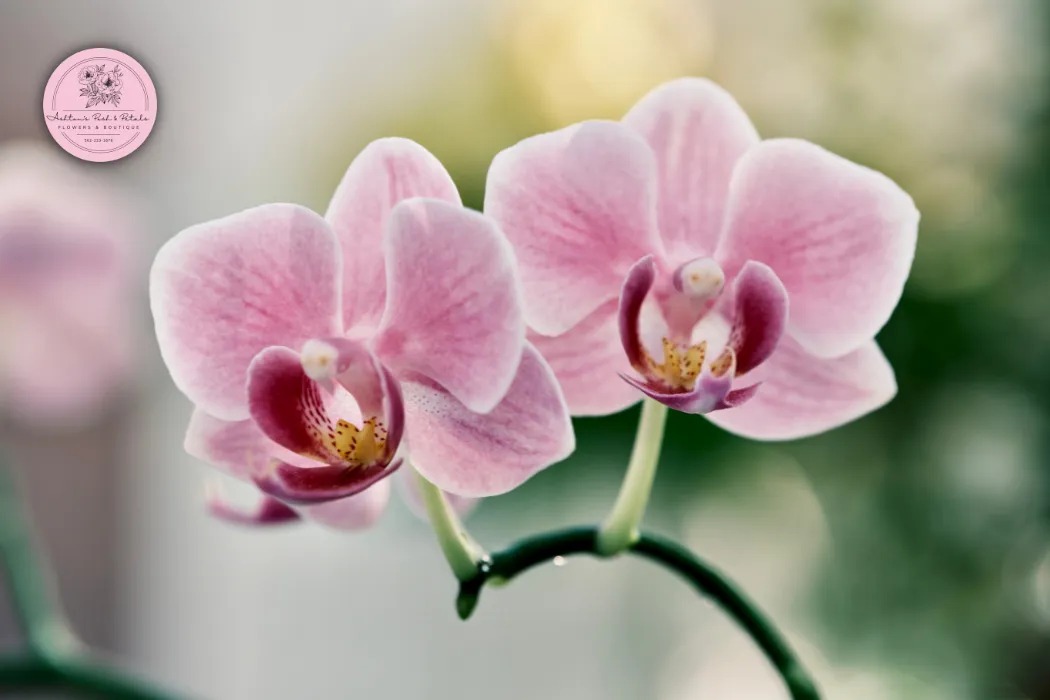
Orchids are considered among the most elegant, vibrant, and attractive flowers, enhancing the beauty of your space. People love to grow orchids in their homes because they symbolise love, beauty, and strength. However, it’s difficult to maintain this houseplant for long. This comprehensive guide will give you a clear idea about how to care for orchids.
Essential Orchid Care Guide
Several factors collectively play a crucial role in an orchid's healthy growth. You need to carefully follow these instructions for orchid care.
Light and Location
Location is very important for orchids because they need bright, indirect light for growth. Therefore, an east-facing window is the right location for orchids because it offers gentle morning sunlight. However, if your home only has south- or west-facing windows, cover them with curtains to protect the plant from intense afternoon sunlight.
A little sunlight affects the plant's growth, leading to dark green leaves and a lack of flowers. On the other hand, excessive direct sunlight can scorch the leaves, leaving them with pale, yellow, or brown patches.
Weather Conditions
The perfect temperature and humidity are the two major factors contributing to the orchid’s stable growth and maintenance. Orchids generally require stable temperatures between 18°C and 27°C. However, specific temperature requirements vary by orchid type; for example, Phalaenopsis orchids prefer warm conditions. Some species such as Cymbidium, Miltonia, and Masdevallia need relatively cold conditions for proper growth.
The indoor environment should be sufficiently humid to support healthy orchid growth, along with proper airflow. Extremely dry conditions will fade the leaves and orchid petals.
Air Circulation
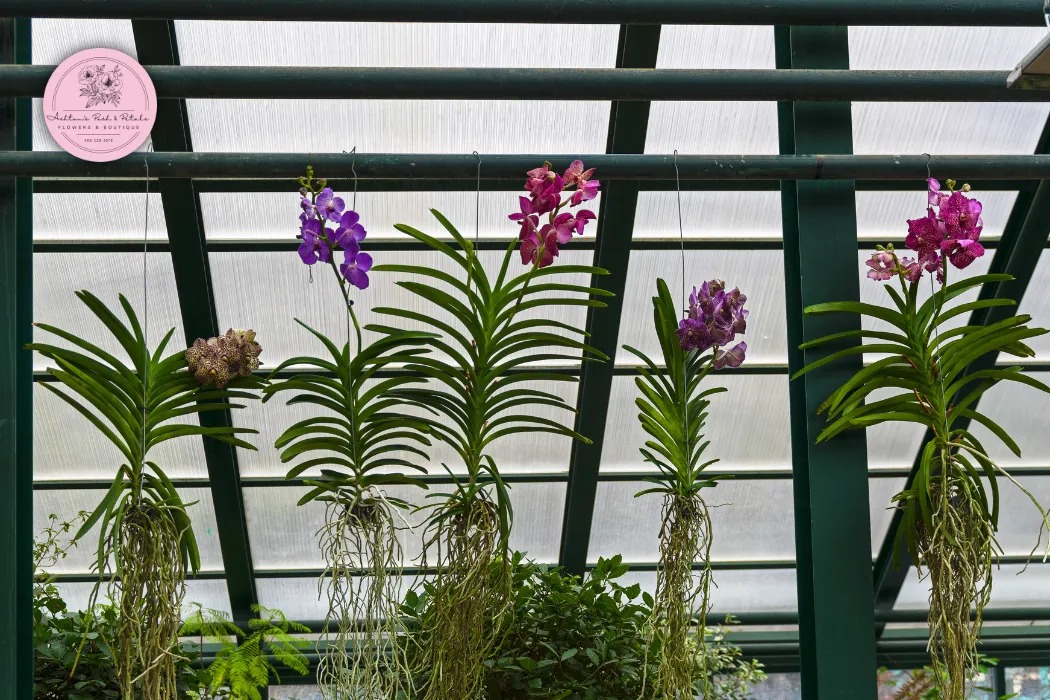
Air circulation is an important factor in protecting orchids from diseases. As you know, orchids require noticeable humidity to maintain healthy leaf and flower growth. At the same time, excessive moisture should be removed through proper airflow to keep leaves healthy. If there is little natural air circulation in your area, you can use small fans to maintain adequate airflow.
Watering
There is no set schedule for orchid watering; it depends on the growing medium, roots, pot size, and humidity. As you feel the growing medium has become mostly dry, roots appear pale, or leaves look dry or less firm, orchids need water. Watering should be slow and consistent; roots should be drained properly without any standing water. Avoid allowing water to remain trapped in the crown, the area where the leaves meet
Fertilizing Requirements
Many people think that more feeding leads to faster growth; however, this is a common misconception. Especially for orchids, you should fertilize them when they are actively producing new roots, leaves, or flower spikes. Keep in mind, you can apply a concentrated dose occasionally. During periods of slow growth, excessive feeding can damage the roots. Moreover, feeding should be done according to the product label.
Orchid Pot Selection
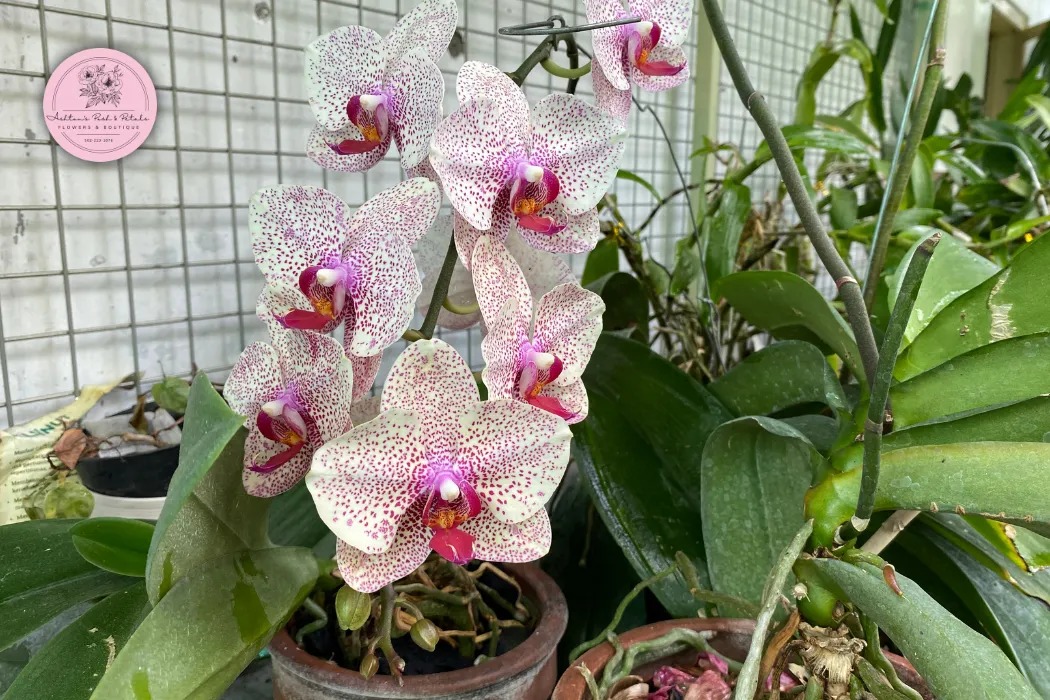
Unlike many other houseplants, orchids cannot be planted in regular pots. Rather, they need special pots because their roots require moisture, proper drainage, and adequate airflow. Based on the above requirements, we are suggesting some of the best orchid pots:
- Orchid bark: Provides good drainage and airflow around the roots.
- Sphagnum moss: Holds more moisture and can be useful in drier indoor conditions, but requires careful watering.
- Perlite: Improves drainage and aeration when mixed with other materials.
- Coconut fibre: Can provide structure and moisture retention in some orchid mixes.
In short, you can say pots with multiple drainage holes, adequate ventilation, and enough sustainability to support the plant are the right option for orchids.
Caring for Orchids While Blooming
You don’t even think about how important it is caring orchid while blooming. During this period, maintain a consistent, suitable temperature and humidity. If you keep the pot moving while they bloom, temperature fluctuations badly impact the growth of flower spikes. Moreover, inspect each flower spike carefully; if you find anything wrong, prune it as soon as possible.
At the end of the flowering season, orchids still need continuous care to rebuild energy for the next flowering cycle.
Pruning
For consistent bloom, pruning is really important and should be done properly. If you find any fully brown, faded, or dried spikes on a Phalaenopsis orchid, remove them. These dried spikes or flowers can damage neighbouring blooms, so should be pruned as soon as possible. Avoid cutting healthy roots or leaves simply because they look slightly different from newer growth. Only remove clearly dead or damaged plant material.
Pests and Disease Protection
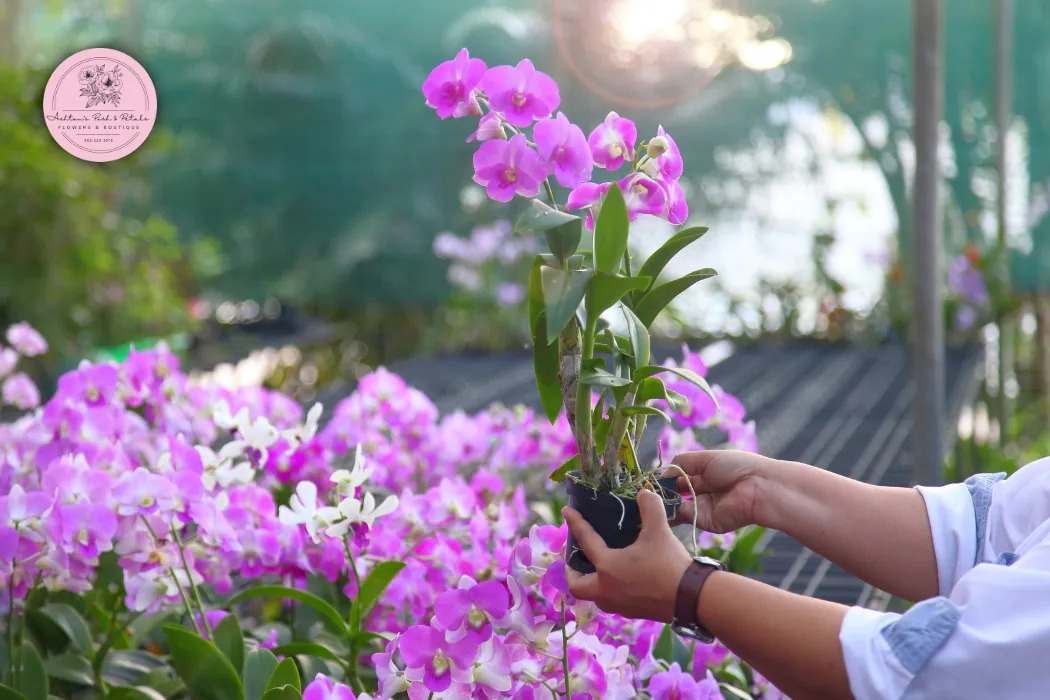
Sometimes, even healthy-looking and well-maintained orchids can develop diseases or experience pest problems. So, leaves, stems, flowers, and roots should be checked regularly.
Common Orchid Pests
- Mealybugs: These are the most common orchid pests and appear as small, white, cotton-like clusters around leaves, stems, and roots. They can be gently removed with a cotton swab dipped in rubbing alcohol.
- Scale: Small, brown or pale insects that attach themselves to plant surfaces and feed on sap. These insects can be easily removed by applying an appropriate horticultural oil or insecticidal soap.
- Spider mites: These tiny pests appear in dry conditions and can cause speckled, dull, or bronzed leaves. Spider mites can be treated by improving humidity or thoroughly rinsing the plant.
- Thrips: Small insects that can damage flowers, leaves, and developing buds. Treat them by isolating the affected orchid and using insecticidal soap or another suitable treatment according to the product label.
Common Orchid Diseases
- Root rot: This orchid disease is often associated with excessive moisture and poor drainage.
- Fungal infections: This common disease may appear as spots or lesions on leaves, flowers, or stems.
- Bacterial infections: Can cause rapidly spreading soft, discolored, or water-soaked areas.
- All these diseases can be cured by removing the infected part, isolating the affected orchid, and avoiding excess moisture. If the disease persists, you can use an appropriate fungicide or bactericide
Orchid Caring Tips for Evergreen Growth
Now you have enough understanding about the basic orchid care. It’s time to share some valuable tips for long-term health.
Seasonal Care Adjustments
Spring and summer:
- In warm conditions, regularly monitor the moisture
- Ensure intense sunlight protection
- Feed for active growth of orchids appropriately
Fall and winter:
- Only perform watering when the growing medium is significantly dry
- Protect from cold windows and heating vents
- Ensure required humidity
Mistakes to Avoid
We will discuss some common mistakes that should be avoided for long-term orchid growth.
- Overwatering
- Excessive direct sunlight
- Poor drainage
- Overfertilizing
- Use of regular potting soil
- Poor airflow
- Ignoring root problems
Bottom Line
At the end, I would say an orchid is different from many other plants. However, you need to follow the basic care techniques rather than complicating the process. Proper watering, perfect temperature and humidity, protection from intense rays, good air circulation and balanced feeding will improve the lifespan of your orchids. Moreover, regular pruning and checking for pests and diseases, along with timely treatment, are essential for promoting regular blooms.
FAQs
How often should I water an orchid?
There is no universal watering schedule. Water when the growing medium has dried sufficiently for your orchid's conditions, then allow excess water to drain completely.
Should I mist my orchid?
Misting is not a substitute for proper watering or humidity management. Maintaining suitable overall humidity and airflow is generally more useful than repeatedly misting the plant.
How much sunlight does an orchid need?
Most commonly grown indoor orchids prefer bright, indirect light. Protect them from intense direct afternoon sunlight that can scorch their leaves.
Why are my orchid leaves turning yellow?
An older leaf may naturally yellow and fall, but widespread yellowing can indicate excessive watering, insufficient light, root problems, or other environmental stress.
How often should orchids be repotted?
Repotting frequency depends on the orchid and its growing medium. Repot when the medium breaks down, drainage deteriorates, or the root system requires attention rather than relying only on a fixed timetable.